

The Airbus effect: what 480 new jobs could mean beyond the Broughton factory gates
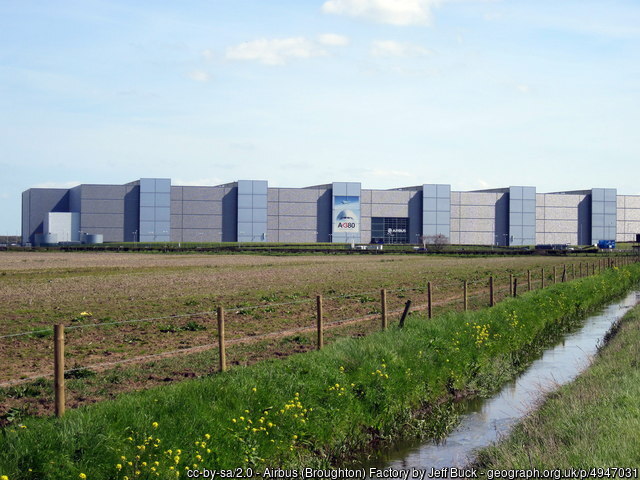
Airbus has created 480 new jobs at its Broughton factory this year. For North Wales, that is a big number.
Around 6,000 people already work at the site, where Airbus makes wings for its aircraft. Now the company is spending £150 million turning part of the factory once used for the A380 into a new production line for the A321.
It means more jobs, more investment and, potentially, more people looking for somewhere to live nearby.
Those 480 workers will not all be new to the area, of course. Plenty may already live within commuting distance. But some will move for the work, and they will arrive at a time when rents in Flintshire are already rising faster than the Welsh average.
And if Airbus keeps growing, the effect may not stop at housing.
Broughton is getting busier
The Airbus investment is about making more aircraft wings.
The first A321 wing is already being worked on at the new facility, with all six production jigs expected to be running by the end of 2026.
There is a reason Airbus needs the extra room. The company has an order backlog of around 7,500 A320 Family aircraft, and roughly three-quarters of those are A321s.
Around 250 of the 480 jobs created at Broughton this year are linked to the refurbished factory. The Welsh Government has said more jobs are expected in 2027.
For an area where aircraft manufacturing has been part of working life for generations, that is good news. But finding hundreds of workers is one thing. Some of them will also need to find a home.
Flintshire rents have jumped 7.2% in a year
A renter in Flintshire is now paying £811 a month on average, according to the latest Office for National Statistics figures.
A year ago, the average was £756. That works out at another £55 every month, or £660 over a year. More strikingly, Flintshire rents have risen by 7.2% in 12 months, compared with 4.3% across Wales.
Space makes a difference too. A one-bedroom home now costs £593 a month on average, while a two-bedroom property is £756.
Airbus is not responsible for those increases. The jobs are new and rents move for plenty of other reasons. But the timing is interesting. Anyone arriving in Flintshire for work is joining a rental market that has already become more expensive.
Starting a new job doesn’t always mean moving straight into a new home
Moving for work is rarely as tidy as packing a van on Friday and starting Monday from your new home.
Someone might rent a furnished flat for a few months while they get to know the area. A family may wait until the end of a school term before following. Homeowners can find themselves starting a new job while their old property is still on the market.
Then there is the cost of moving itself. The cost of moving house currently sits at just over £13,000 for moving into a house worth £292,000. This shows how quickly the bill can grow once legal fees, surveys, removals and other costs are added up.
House prices in Flintshire are at least lower than the UK average. The typical home cost £216,000 in July, according to the ONS, compared with £273,000 across the UK. First-time buyers in Flintshire paid £186,000 on average.
That could make the area attractive to somebody moving from a more expensive part of Britain. They may still want to rent first, rather than buying in a town they barely know.
Renting first can bring another problem
Choosing where to live around Broughton is not difficult because there is only one option.
Chester is close by. Mold, Buckley and other parts of Flintshire offer something different, while workers willing to travel further can look deeper into North Wales.
Renting gives someone new to the area a chance to work out where they actually want to be.
For people moving from overseas, though, there can be another hurdle. They may have a good salary but little UK rental history, and some landlords or letting agents will ask for a guarantor.
That can be awkward if your family and friends are all in another country. Professional rental guarantor services can act as a guarantor for renters who meet their checks but do not have someone suitable to ask themselves.
It sounds like a small part of a much bigger story about aircraft and investment. For the person trying to start a new job in a new country, it can be the difference between finding a home quickly and spending weeks trying to sort one out.
Businesses can run out of room as well
There is another side to the Airbus story.
Big employers do not exist on their own. Thousands of workers buy lunch, use local services and spend their wages nearby. Large factories also work with other businesses, from suppliers to contractors.
If some of those businesses grow, they can eventually face their own space problem.
It rarely happens overnight. Another five people join, a few desks get squeezed in and a meeting room starts being used as an office. At some point, making do stops working.
SFI Logistics, which manages office relocations across the UK, works with companies moving furniture, equipment and IT between workplaces, including businesses that need to move in stages while staying open.
They commented: “You don’t usually hire a few people and immediately decide to move office. Businesses make the space work for as long as they can. More desks go in, teams get moved around and eventually you reach the point where the building just isn’t working anymore.
“The difficult bit is moving without bringing the business to a stop. That’s why some companies move a team or a floor at a time, rather than trying to do everything over one weekend.”
Whether Airbus’s expansion leads to that kind of growth elsewhere in North Wales will take time to become clear. But another 480 jobs means more people earning and spending money in and around the region.
And Broughton is not finished growing. Airbus says more jobs are expected next year. If they arrive, the question for North Wales will not only be how many people the factory can employ, but where those people will live and how the businesses around them respond.


