

When North Wales Offices Feel Stuck in the Past
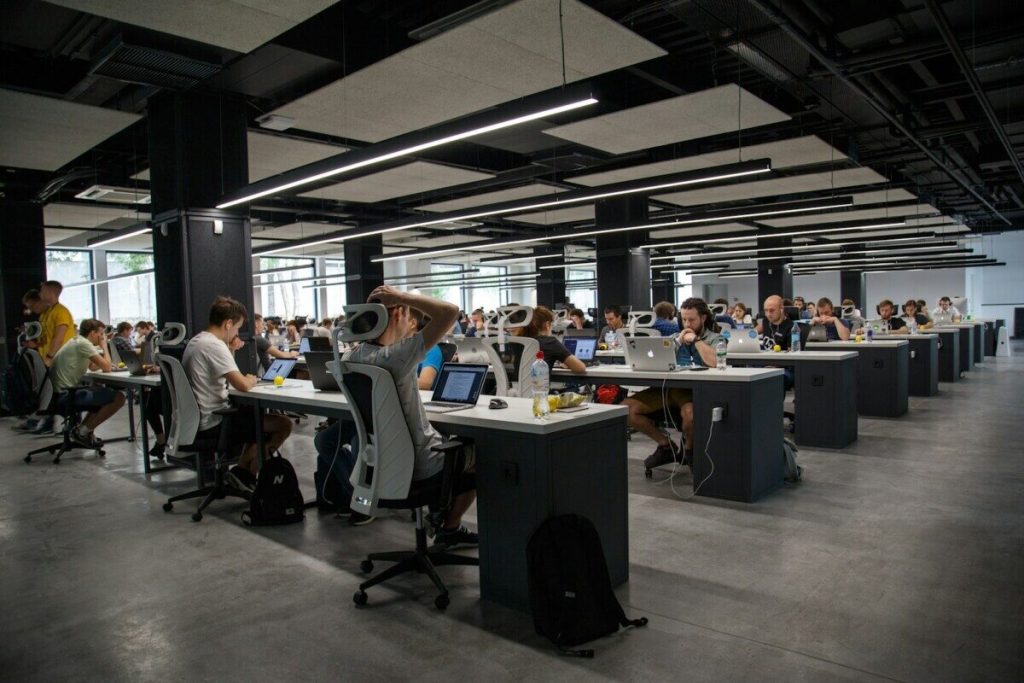
Many North Wales offices still run in spaces designed decades ago. Layouts built for fixed desks and landlines. Staff walk past empty meeting rooms looking for a quiet corner to take a call. Nobody planned it that way. It just ended up like that.
Productivity drops. Energy bills climb. Good people leave for offices closer to Manchester or Liverpool that actually work for them. The region has seen more businesses act on this recently, not because of aesthetics, but because the numbers started making the decision obvious. Where to start and how to phase it without breaking operations is the harder question.
The Hidden Costs of Outdated Office Environments
Stained carpets and broken chairs are obvious. The financial effects of poor workspace design are harder to see and considerably more damaging. Many businesses underestimate what ageing offices cost over a full year.
Old lighting systems push up energy bills month after month. Moving from outdated fittings to LED alternatives can reduce energy use enough to make the wider office review harder to ignore. Worth running the numbers before dismissing it.
Poor air quality and uneven temperatures affect concentration in ways that do not show up obviously on any single day. Mistakes creep in. Energy drops earlier in the afternoon. Staff in spaces that run too hot or too cold work differently than they would in a regulated environment. Productivity losses that accumulate across every working day of the year.
Repair bills compound the problem. Older buildings consume a disproportionate share of annual budgets patching problems that keep returning. That money could fund planned, phased improvements instead. Waiting rarely reduces costs. It increases them.
How Workspace Design Affects Employee Retention in Regional Markets
North Wales businesses compete for talent against cities. Workers who live in the region can travel. Pay matters. So does the office. Many employees weigh workplace quality when assessing job offers, and a space that feels dated or uncomfortable is a reason to leave, not a neutral factor.
Sound privacy is a specific and repeated complaint. Before hybrid working became standard, open-plan layouts made a kind of sense. They do not anymore. Staff need somewhere to take a private call without walking outside. That is not a luxury request. It affects both output and how people feel about staying.
Flexible, adaptable layouts address this directly. Modular spaces that shift as team needs change reduce staff turnover and cut the cost of replacing people who leave. A phone booth added in the right corner of an open-plan floor can change how the whole space feels to use. Small interventions with large effects on retention. For North Wales businesses reviewing office design services, Studio Alliance belongs in the conversation when layout changes need to reflect how teams actually work, not how the office was planned ten years ago.
Regulatory Compliance Gaps in Ageing Office Stock
Offices built or last updated before 2010 frequently fall short of current regulations. That is not a stylistic problem. It is a legal and financial exposure that grows the longer it goes unaddressed.
Building Regulations have tightened around energy performance, and older commercial spaces can fall behind faster than owners expect. Minimum Energy Efficiency Standards have made poor EPC performance harder to ignore during leases, renewals and property reviews. Businesses caught below the required threshold face complications that are neither quick nor cheap to resolve.
Accessibility is a separate gap. The Equality Act 2010 requires reasonable adjustments for disabled staff and visitors. Many pre-2010 layouts were never designed with those requirements in mind. Assuming older compliance certificates still apply after rule changes is a common and expensive mistake. Commissioning a fresh audit through specialist office refurbishment services identifies these risks before they become enforcement issues.
Practical Indicators Your Office Needs Evaluation
Some warning signs are visible immediately. Others accumulate slowly until the cost of ignoring them becomes impossible to justify.
Technology infrastructure is often the first indicator. When video calls lag, cloud systems run slowly, or new equipment strains the building’s cabling, the physical environment is limiting the business. That is a workspace problem, not an IT problem.
Staff feedback tells the rest of the story. Falling satisfaction scores in facilities categories. Recruitment candidates mentioning the office as a negative. Acoustic privacy complaints surfacing repeatedly in team meetings. These are not soft signals. Each one represents something the space is costing the business.
Rising energy bills and maintenance requests above historical averages point to infrastructure degrading rather than functioning. Booking external meeting rooms regularly because internal facilities cannot support collaborative work is another clear indicator. Individually, a flag. Several together, a pattern worth acting on.
Quantifying the Business Case for Workspace Investment
The financial case for workspace investment pulls from several directions at once. LED and ventilation upgrades cut utility spend. Better retention reduces recruitment costs. A flexible layout extends lease value by absorbing growth without relocation. None of these figures is dramatic in isolation. Together they shift the return on investment conversation considerably.
Modern collaborative spaces support hybrid working models now standard across UK businesses. A space that cannot support hybrid working cannot support how the business actually operates. That mismatch has a cost. It compounds each year the layout stays unchanged.
A structured audit run by an office design company maps the specific gaps before any budget is committed. What the space is losing, where, and how much. That clarity turns a vague intention to update into a project with defined scope and a traceable return.
Self-Assessment Checklist: 10 Warning Signs Your North Wales Office Requires Professional Evaluation
Does your technology infrastructure struggle to support cloud-based systems and video conferencing?
Does space utilisation stay low during core hours?
Have employee satisfaction scores declined in facilities-related survey categories?
Does recruitment feedback consistently mention office environment as a negative factor?
Have energy bills increased disproportionately compared to usage patterns?
Do maintenance requests sit noticeably above previous years?
Does collaborative project work require off-site meeting room bookings?
Are acoustic privacy complaints common?
Do staff report ergonomic discomfort regularly?
Has your building failed to meet updated regulatory standards?
If you answered yes to three or more questions, your office likely needs professional evaluation.
Older offices rarely fail all at once. They drain budget, energy and staff patience in small increments. A phased review gives North Wales businesses a cleaner route forward. Fix the pressure points that are already costing money. Protect daily operations. Invest where the evidence points, not where the instinct does.


